
Stress and productivity have always been closely linked. A certain amount of pressure can fuel motivation, sharpen focus, and push us toward meeting deadlines. But when stress crosses the tipping point, it drains energy, clouds judgment, and causes performance to plummet. For millennial parents juggling careers, family responsibilities, and personal goals, this balance is especially tricky. The challenge isn’t eliminating stress—it’s learning how to manage it in a way that sustains productivity without sacrificing well-being.
That’s what we’ll be discussing today.
The Stress–Productivity Curve
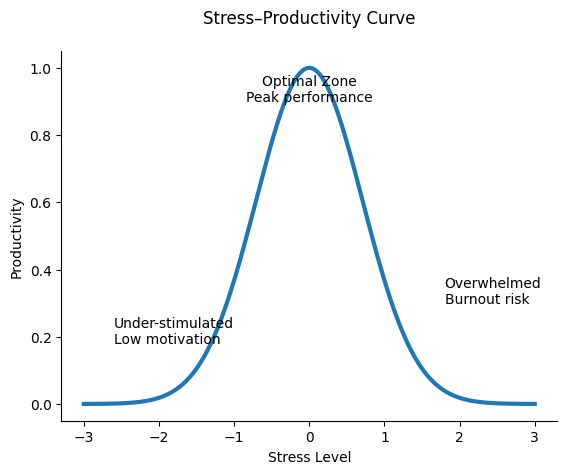
Think of stress and productivity as a bell curve. At the start, low levels of stress create little urgency—leading to procrastination or lack of focus. Moderate stress, however, triggers alertness and energy, propelling us into action. This is often called “eustress,” or positive stress. But once stress levels climb too high, productivity dips. Chronic anxiety, overcommitment, and burnout become the norm, making it harder to stay effective.
Understanding where you fall on this curve can help you adjust your workload, environment, and habits to stay in the “sweet spot” where pressure becomes productive rather than destructive.
Common Ways Stress Hurts Productivity
- Decision fatigue: When overwhelmed, even small choices feel exhausting.
- Reduced focus: Stress makes it harder to concentrate on deep work, causing more errors.
- Decreased creativity: High anxiety stifles problem-solving and innovation.
- Health setbacks: Poor sleep, headaches, or frequent illness take time and energy away from work and family life.
Strategies to Balance Pressure and Performance

1. Redefine Pressure
One of the biggest mindset shifts you can make is recognizing that stress isn’t always the enemy. Often, it’s simply information. Stress can signal that something matters to you or that a situation needs attention. Instead of reacting with frustration or avoidance, try viewing stress as a form of feedback.
Ask yourself reflective questions such as:
- What exactly is causing this pressure?
- Is this expectation realistic or self-imposed?
- Is my workload aligned with my priorities?
For example, if you feel constant stress about work emails late at night, the issue may not be the emails themselves—it might be a boundary problem. If you’re stressed about an overwhelming to-do list, the problem might be unrealistic expectations or lack of prioritization.
By treating stress as a signal instead of a threat, you move from reacting emotionally to responding strategically. This shift allows you to identify what needs adjusting—your schedule, your habits, or even your mindset—and turn pressure into a tool for improvement.
2. Build Micro-Breaks Into Your Day
When people think about reducing stress, they often imagine taking long vacations or completely unplugging from work. While those things can help, the most powerful stress management tool is often much smaller and more consistent.
Micro-breaks are short pauses—usually 2–5 minutes—that allow your brain and nervous system to reset throughout the day.
These breaks might include:
- Standing up and stretching
- Taking a short walk outside
- Practicing deep breathing for a few minutes
- Stepping away from screens
- Getting a glass of water or a healthy snack
Research shows that the brain performs best in cycles of focused work followed by short recovery periods. Without those pauses, mental fatigue builds up and productivity drops.
For busy parents and professionals, micro-breaks are especially valuable because they are realistic and sustainable. You may not have an hour for a workout during the workday, but you almost always have a few minutes to reset your focus.
Ironically, stepping away briefly often allows you to return to your work with more clarity and efficiency than if you had tried to power through exhaustion.
3. Prioritize Ruthlessly

One of the most common sources of stress is the feeling that everything is urgent. When your to-do list is full and every task seems equally important, your brain goes into overload mode.
The solution is learning to prioritize ruthlessly.
A helpful framework for this is the Eisenhower Matrix, which divides tasks into four categories:
- Urgent and Important – Do these immediately.
- Important but Not Urgent – Schedule these intentionally.
- Urgent but Not Important – Delegate if possible.
- Neither Urgent nor Important – Eliminate or postpone.
The key insight is that many people spend too much time reacting to urgent tasks that don’t actually move their goals forward.
When you prioritize effectively, you focus your energy on high-impact activities, which reduces mental clutter and increases a sense of control. Instead of feeling pulled in multiple directions, you move through your day with a clear sense of what truly matters.
And clarity is one of the most powerful antidotes to stress.
4. Use Mindfulness to Stay Present
Stress often comes from living in the future—worrying about deadlines, expectations, or worst-case scenarios. Mindfulness helps bring your attention back to the present moment, where most problems are far more manageable.
Mindfulness doesn’t require hours of meditation or a complicated routine. It simply means intentionally paying attention to the present moment without judgment.
Some simple mindfulness practices include:
- Taking five slow, deep breaths before starting a task
- Journaling your thoughts to clear mental clutter
- Practicing gratitude by listing three positive things from your day
- Pausing to notice your surroundings during a short walk
For busy parents especially, mindfulness can act as a mental reset button. A few minutes of intentional breathing before transitioning from work mode to family time can make a huge difference in how present and engaged you feel.
Over time, mindfulness strengthens your ability to notice stress without being overwhelmed by it, allowing you to respond calmly rather than react impulsively.
5. Create Healthy Routines
When life becomes busy and stressful, self-care habits are often the first things people abandon. Unfortunately, those are the exact habits that help you stay resilient under pressure.
Healthy routines create a strong foundation for managing stress and maintaining productivity.
Three habits matter most:
Sleep – Quality sleep improves focus, decision-making, and emotional regulation. Without enough rest, even small challenges can feel overwhelming.
Movement – Exercise releases endorphins, reduces anxiety, and improves mental clarity. Even short daily walks can dramatically lower stress levels.
Nutrition – What you eat affects your energy, concentration, and mood. Balanced meals help prevent energy crashes that can increase stress and irritability.
These habits may seem simple, but they act like fuel for your mental performance. When your body is supported, your mind is better equipped to handle pressure without burning out.
6. Set Clear Boundaries

In today’s connected world, work and personal life often blend together. Emails arrive after hours, notifications interrupt family time, and the pressure to always be available can create constant background stress.
Setting clear boundaries is essential for protecting both productivity and well-being.
This might include:
- Establishing a defined end to your workday
- Turning off work notifications during personal time
- Blocking uninterrupted focus time on your calendar
- Saying “no” to commitments that don’t align with your priorities
For millennial parents especially, boundaries help ensure that work responsibilities don’t consume the time meant for family, rest, and personal growth.
Boundaries aren’t about avoiding responsibility—they’re about protecting your energy so you can show up fully where it matters most.
When you create space between work and recovery, you return to your responsibilities more focused, more present, and far more productive.
Conclusion
The relationship between stress and productivity isn’t about eliminating pressure from your life—it’s about learning how to manage it wisely. When stress is ignored or allowed to grow unchecked, it can lead to burnout, poor decision-making, and constant overwhelm. But when you understand what your stress is signaling and respond intentionally, it can become a powerful driver of focus, growth, and performance.
By redefining pressure as feedback, building small recovery moments into your day, prioritizing what truly matters, and practicing mindfulness, you give yourself the tools to stay productive without sacrificing your well-being. Pairing these strategies with healthy routines and clear boundaries creates a foundation that allows you to perform at a high level while still protecting your energy.
For millennial parents and professionals especially, this balance is essential. Life is full of responsibilities, but productivity shouldn’t come at the cost of your health, your relationships, or your peace of mind.
The goal isn’t a stress-free life—it’s a stress-resilient life. When you learn how to manage pressure effectively, you don’t just get more done. You create a sustainable rhythm that allows you to show up with clarity, purpose, and presence in every area of your life.
Call to Action
This week, pay attention to your stress levels. Are they energizing you or weighing you down? Try one of the strategies above—whether it’s taking a mindful break, setting clearer priorities, or establishing firmer boundaries—and notice the difference in both your productivity and your peace of mind.

5 Ways to Transform Anger Into Productive Action
Anger is often seen as a negative emotion, but what if it could be your greatest ally? Instead of letting anger control your actions, learn to channel it into productive

13 Practical Strategies for Overcoming the Fear of the Unknown
Fear of the unknown is a natural human response, but left unchecked, it can quietly limit our lives. From missed opportunities to stalled growth, uncertainty often feels like the enemy.

This 21-Day Thankfulness Challenge Will Change Your Perspective
Discover the transformative power of gratitude with our 21-Day Thankfulness Challenge! This challenge is designed to reshape your mindset, deepen your connections, and foster personal growth. Each week, you’ll explore

Having a Bad Day? Here Are 30 Mental Health Quotes to Calm Your Mind
Bad days are universal, but they can be transformed with the right mindset. Mental health quotes serve as powerful tools for clarity and comfort. By fostering self-acceptance and perspective shifts,