
Decision paralysis doesn’t usually show up as panic—it shows up as stalling. You check email again. You tweak a document that didn’t need tweaking. You stay busy but don’t move forward.
I’ve been there—work deadlines, family responsibilities, personal goals—all genuinely important. The mistake I kept making was assuming that prioritization meant finding the perfect order. In reality, it’s about choosing a good enough direction and committing to it.
Here’s how to do that when everything feels urgent.
1. Separate “Important” From “Urgent”
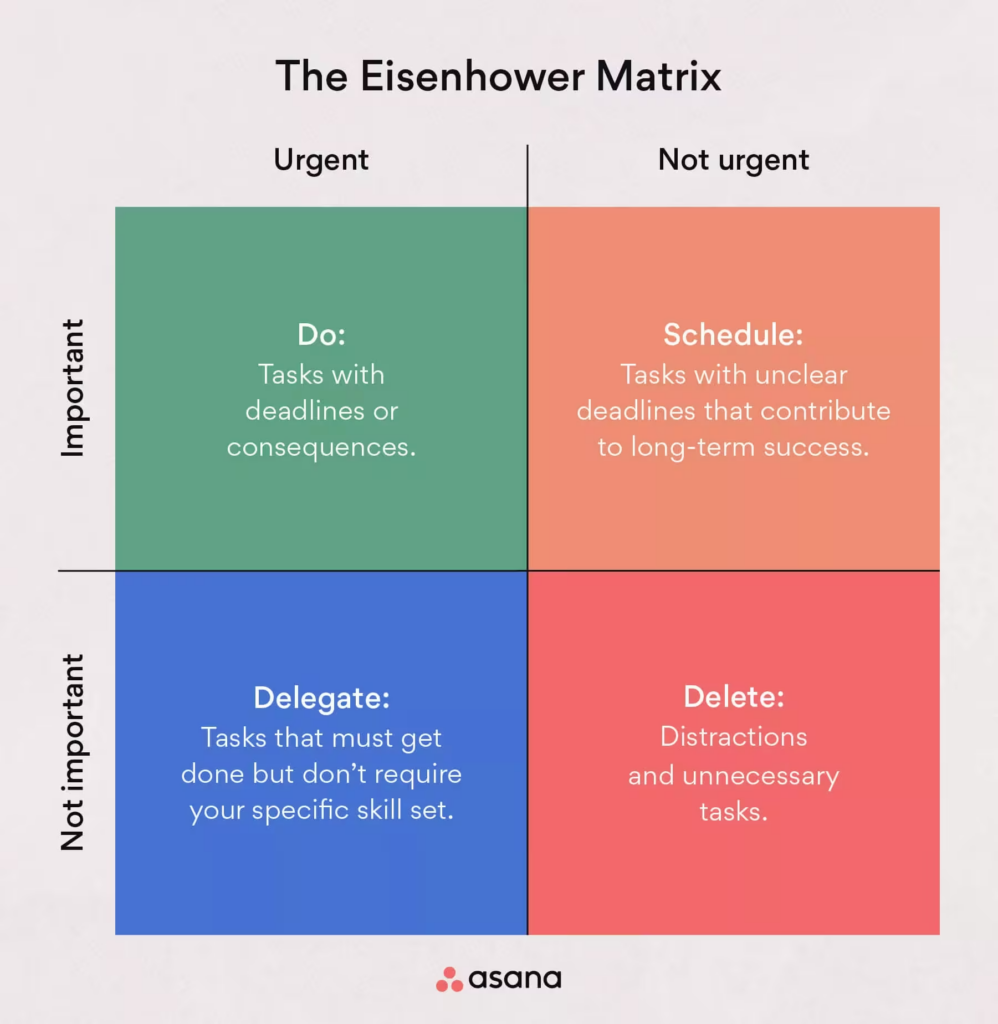
I used to treat every Slack message, email, or notification as urgent—especially at work. I’d respond quickly, feel productive, and then wonder why my most meaningful work kept getting pushed to the evening or weekend.
The turning point came when I noticed that the tasks moving my goals forward—writing, planning, thinking—were rarely labeled “urgent” by anyone else. Once I started protecting time for important-but-not-urgent work, my days felt calmer and my output improved.
Insight: Urgency is often external. Importance is usually internal.
2. Define Today’s “One Thing” (This Is Harder Than It Sounds)

This strategy sounds simple—but in practice, it’s where decision paralysis shows up most often.
A real example: I once found myself stuck between two good options. I could either:
- Finish writing an article I had already started, or
- Watch an informative self-development video that promised helpful insights
Both felt productive. Both felt important. And that’s exactly why I was stuck.
When I paused and asked, “If I only do one thing today, what actually moves the needle?” the answer became clear. The article—once finished—would be published, shared, and create value immediately. The video, while useful, could wait.
So I chose to finish writing the article.
That decision didn’t mean self-development wasn’t important. It meant that creation mattered more than consumption in that moment.
When everything feels important, defining your “one thing” forces you to move from vague productivity to meaningful progress.
Insight: Prioritization isn’t about choosing the best option—it’s about choosing the most impactful one right now.
3. Use the 10–10–10 Filter to Escape Short-Term Thinking
The 10–10–10 filter is a simple decision-making tool designed to pull you out of short-term thinking.
When you’re stuck between options, ask yourself three questions:
- How will this decision feel in 10 minutes?
- How will it feel in 10 days?
- How will it feel in 10 months?
The goal isn’t to predict the future perfectly—it’s to create perspective. Decisions that only matter in the next 10 minutes often feel urgent but fade quickly. Decisions that still matter in 10 months usually deserve more attention.
I’ve used this filter when deciding whether to say yes to additional commitments—especially ones that sounded good in the moment. In the short term, saying yes felt helpful and responsible. Ten days later, I felt stretched. Ten months later, I couldn’t even remember why I’d agreed.
Now, when I’m torn between tasks or commitments, I pause and think beyond immediate relief. If something won’t matter beyond today, I’m far more willing to let it wait.
Insight: Short-term pressure fades faster than long-term impact.
4. Limit Active Priorities to Three (Your Brain Will Thank You)

I once tried managing a week with eight “top priorities.” By midweek, I was exhausted and behind on all of them.
When I forced myself to narrow it down to three, something shifted. I stopped constantly reassessing what to do next and started finishing things. Especially as a parent, fewer priorities meant fewer decisions when plans inevitably changed.
Insight: More priorities don’t create progress—they dilute it.
5. Decide in Advance So You Don’t Rely on Willpower
My least productive days almost always have one thing in common: I’m deciding what matters while everything is already happening.
Now, I plan priorities during quieter moments—early mornings or end-of-week reviews. When the day gets chaotic, I don’t need to think. I just follow the plan.
Insight: The best time to prioritize is when you’re calm, not overwhelmed.
6. Accept Trade-Offs Instead of Fighting Them

This one took me the longest to accept.
There have been seasons where I expected to excel at work, be fully present at home, stay consistent with fitness, and still have energy left over. That expectation led to frustration—not excellence.
Once I accepted that different seasons require different priorities, the guilt eased. Some weeks, work gets the focus. Other weeks, family or rest needs to win.
Insight: You can do many things well—just not all at once.
7. Take the Smallest Next Action to Break the Freeze
When a task feels overwhelming, I’ve learned not to ask myself to “finish” it. I ask myself to start it. Opening a document, writing one sentence, outlining a section—those small actions consistently unlock momentum.
More often than not, clarity shows up after I begin, not before.
Insight: Starting is often the hardest—and most important—decision.
Final Thought: Prioritization Is a Practice, Not a Personality Trait
If there’s one thing I’ve learned, it’s that decision paralysis usually isn’t about not knowing what to do—it’s about being afraid to choose the wrong thing.
I still have days where everything feels important. Work, family, personal growth—it all matters to me. But what’s helped is realizing that prioritization isn’t about getting it perfect. It’s about making a clear choice, committing to it, and trusting that I can adjust tomorrow.
Some days that choice is finishing the work I started. Other days it’s being fully present at home or giving myself permission to rest. What matters is that the decision is intentional, not reactive.
Progress doesn’t come from doing everything. It comes from doing the right thing for this season, then showing up again the next day to choose wisely once more.
That’s the muscle I’m trying to build—and if you’re feeling stuck, overwhelmed, or pulled in too many directions, you’re not alone in that.
Just choose one thing. Start there.

Steve Jobs’ Surprisingly Effective 10-Minute Rule for Explosive Creativity
We've all been there—staring at a problem too long. What if stepping back is the best move? Steve Jobs used a “10-minute rule” involving short walks to spark creativity. Research...
Read More
7 Proven Prioritization Strategies to Overcome Decision Paralysis
Feeling stuck in a cycle of endless tasks and decisions? You're not alone. Decision paralysis often manifests as stalling—checking emails, tweaking documents, and staying busy without making real progress. The...
Read More
How to Build Professional Skills in 30 Days
Are you ready to elevate your professional skills but struggling to find the time? You’re not alone! In just 30 days, you can make meaningful progress with a focused approach....
Read More
How to Master Seasons of Silence and Action
Life is a delicate dance between silence and action, where each phase shapes our experiences and resilience. Embracing both seasons with intention is essential for a balanced, fulfilled life. In...
Read More