
Why Leadership Drives Revenue
Effective leadership is not just a “nice-to-have” in small business—it’s the engine behind sustainable growth and profitability. The right leader turns challenges into opportunities, teams into cohesive units, and ideas into income. I’ve felt this firsthand while launching two online businesses in the last 12 months. Even as a solopreneur, the truth hasn’t changed: strong leadership is still one of the biggest drivers of revenue, retention, and the long-term health of the business.
These leadership qualities are crucial across all industries, as organizations in every sector rely on effective leaders to adapt, innovate, and remain competitive.
Great leaders are visionaries who make tough decisions, inspire their teams, and foster cultures where innovation and accountability thrive. Let’s explore the ten essential leadership qualities that drive revenue and set businesses on the path to lasting success.
1. Visionary Thinking: The Revenue Roadmap

Revenue-driving leaders don’t just manage the present—they plan the future. A strong vision gives direction to teams and provides clarity on what success looks like. Visionary leaders set a clear course for their teams, ensuring everyone understands the planned path forward.
- Leaders must articulate their goals with conviction.
- A clear roadmap aligns daily efforts with long-term business objectives.
- Vision enables leaders to anticipate changes and adapt quickly.
- Maintaining focus on long-term objectives is essential for sustained growth.
Revenue Impact: Teams perform better with a defined target, and strategic alignment leads to better execution and outcomes. Visionary thinking ensures everyone is on the same page, driving unified execution.
2. Emotional Intelligence: The Human Multiplier
Emotional intelligence (EQ) sets apart transactional managers from transformational leaders. EQ includes self-awareness, empathy, and the ability to regulate emotions in high-stress environments.
- Empathetic leaders build trust and psychological safety.
- Leaders with high levels of emotional intelligence foster trust and open communication.
- High EQ improves communication and reduces team conflict.
- Self-aware leaders understand their impact and lead with intention.
Revenue Impact: Teams led with emotional intelligence experience less churn and higher productivity—two key revenue levers. Emotionally intelligent leaders keep teams engaged, leading to better performance.
3. Strategic Communication: Leading with Clarity

Revenue growth demands clarity—internally and externally. Leaders must consistently communicate expectations, feedback, and purpose.
- Clear communication reduces wasted effort.
- Transparent updates build credibility and morale.
- Storytelling aligns teams and customers with your mission.
- Communicating and adjusting priorities keeps teams aligned and focused on shared goals.
Revenue Impact: Miscommunication costs time and money; clarity improves efficiency, accountability, and customer retention. Clear communication also creates a culture of alignment and shared purpose, driving better results.
4. Accountability and Empowerment: Culture That Performs
Accountability is the backbone of a high-performance culture. But accountability doesn’t mean micromanagement—it thrives when paired with empowerment. Accountability creates a culture of trust and performance, laying the foundation for team success.
- Set measurable goals and follow up regularly.
- Recognize achievements publicly to reinforce desired behaviors.
- Trust your team with ownership of results.
- Encourage regular practice of empowerment and accountability to develop these qualities over time.
Revenue Impact: Empowered teams take initiative, solve problems faster, and perform better—boosting your bottom line.
5. Customer Obsession: Fuel for Long-Term Growth
Retention is revenue. Successful leaders understand that customer experience is not a department—it’s a culture.
- Regularly collect customer feedback and act on it.
- Create seamless onboarding and support experiences.
- Encourage all employees to think customer-first.
- Refine services to better meet customer needs and expectations.
Revenue Impact: Increasing retention by just 5% can boost profits by 25–95%, according to Bain & Company. Delivering quality experiences not only drives customer loyalty but also increases revenue.
6. Data-Driven Decision Making: Smart Moves Only

Gut instincts matter—but in the modern business landscape, data is your compass.
- Monitor KPIs like CAC, LTV, churn, and gross margin.
- Use dashboards to make performance visible.
- Invest in tools that support real-time analysis.
- Establish a continuous process for collecting and analyzing data to ensure ongoing improvement.
Revenue Impact: Leaders who use data make faster, better decisions that reduce waste and increase profitability. Data enables leaders to decide on the best course of action based on thorough analysis.
7. Resilience and Adaptability: Thrive Through Change
Markets shift. Teams evolve. Technology disrupts. Revenue-focused leaders stay grounded but flexible.
- Maintain a long-term perspective in short-term chaos.
- Encourage learning from setbacks.
- Pivot quickly when market signals change.
- Focus on developing resilience through ongoing learning and adaptation.
Revenue Impact: Resilient leadership helps companies navigate crises and come out stronger—with revenue intact or even improved. For example, during the 2008 financial crisis, companies like Netflix thrived by adapting their business model and developing innovative strategies, demonstrating how resilient leadership can drive growth through change.
8. Sales Enablement and Strategy: Align for Acceleration
Sales isn’t just a department—it’s a strategy. Great leaders are closely connected to the sales function and understand the importance of supporting the sales team with the right resources and strategies.
- Set clear revenue goals and metrics.
- Invest in training, tools, and performance incentives.
- Train the sales team regularly to ensure they have the skills and knowledge needed to succeed.
- Involve leadership in large deals and pipeline reviews.
Revenue Impact: Aligned leadership supports more confident, capable sales teams and better close rates. Aligning sales and marketing efforts also accelerates revenue growth.
9. Financial Literacy: Leading the Numbers
A strong grasp of financial fundamentals helps leaders allocate resources wisely and mitigate risk. Understanding how to spend wisely and manage costs is essential for effective financial planning.
- Understand budgets, cash flow, and balance sheets.
- Prioritize high-ROI investments.
- Evaluate each investment for long-term growth and value.
- Manage assets strategically to support business objectives.
- Build a reserve fund for tough times.
- Build an emergency fund as a financial safety net for unexpected expenses.
- Recognize the importance of saving for retirement early to ensure long-term security.
- Invest in education to enhance financial literacy and career prospects.
Revenue Impact: Financially literate leaders avoid costly mistakes and protect their margin while scaling. Leaders who prioritize saving, investing, and asset management are better prepared for financial challenges.
10. Innovation and Growth Mindset: Future-Proofing the Business

Finally, strong leaders champion innovation and continual improvement. Leaders seeking to expand into new markets and locations must foster a culture that supports growth and adaptability.
- Foster a “fail fast, learn faster” culture.
- Reward curiosity and experimentation.
- Continuously assess product-market fit.
- Align innovation efforts with organizational goals to ensure growth initiatives support the broader mission.
Revenue Impact: Innovation opens new revenue streams, drives differentiation, and sustains relevance in a competitive market. It also helps businesses grow, expand their reach, and capture greater market share.
*Bonus* Risk Management: Safeguarding Revenue in Uncertain Times
In today’s unpredictable world, risk management is a vital leadership skill that can make or break a business—especially for small businesses and companies in the growth stage. Good leaders recognize that anticipating and preparing for potential threats is essential to achieving financial success and maintaining steady growth.
- Proactive leaders identify risks early, from market fluctuations to operational disruptions, and develop strategies to minimize their impact.
- Implementing robust risk management processes—such as regular audits, contingency planning, and clear communication protocols—helps organizations stay resilient and responsive.
- By prioritizing risk management, leaders build trust with customers, employees, and stakeholders, demonstrating a commitment to stability and long-term success.
Revenue Impact: Effective risk management protects your business from costly setbacks, supports uninterrupted operations, and ensures your organization can continue to drive revenue and achieve its growth goals—even in uncertain times.
Final Thoughts
Leadership is a force multiplier. When practiced with intentionality and discipline, it doesn’t just make teams better—it makes businesses more profitable. Whether you’re leading a two-person startup or a growing team of 20, focusing on these ten qualities will position you to lead your business toward sustained revenue growth and long-term success.

10 Essential Leadership Qualities That Drive Revenue
Effective leadership is the engine behind sustainable growth and profitability in any business. It transforms challenges into opportunities and ideas into income. Discover the ten essential leadership qualities that not...
Read More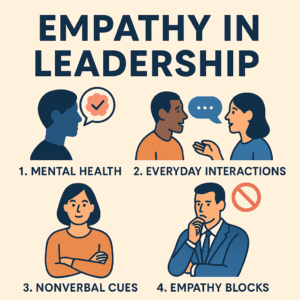
8 Guaranteed Steps to Develop Empathy for Meaningful Leadership
Empathy isn’t a soft skill—it’s a leadership advantage. In workplaces where pressure runs high, leaders who can genuinely understand and respond to others’ emotions build stronger, more loyal, and more...
Read More
The Silent Crisis in Tech: Why EQ Is The Key For Successful IT Teams
In the fast-paced world of technology, one crucial element often gets overlooked: emotional intelligence (EQ). While cutting-edge innovations drive progress, it’s the people behind the tech who truly make a...
Read More
Mastering the 5 Levels of Leadership: Your Path to Effective Influence
Have you ever looked at an inspiring leader and wondered, "How do they lead so effectively?" Leadership isn't just a natural gift; it can be developed with effort and the...
Read More